
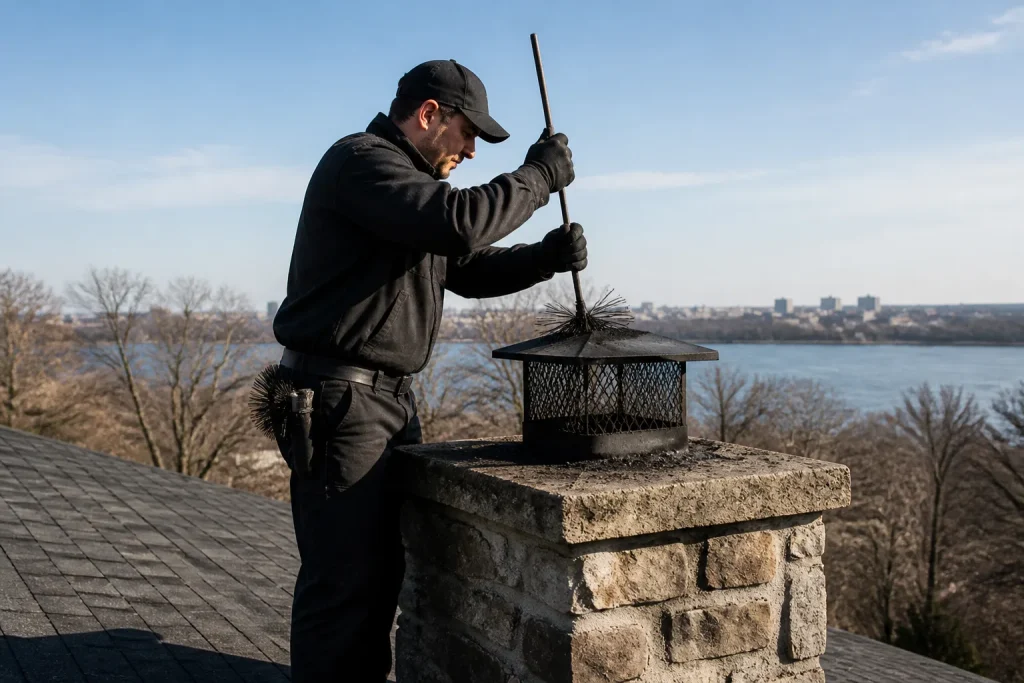
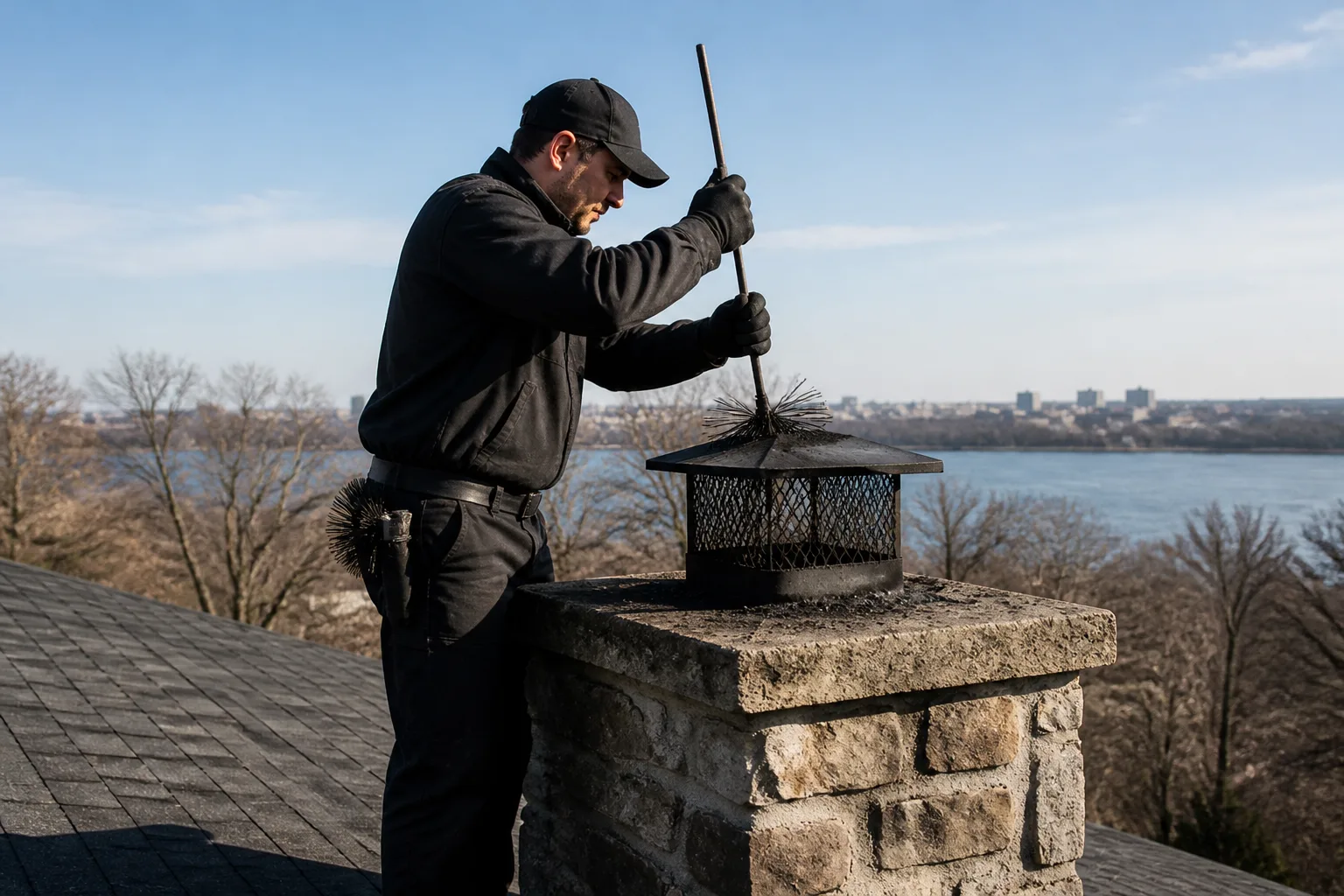
How to Choose the Right Chimney Cleaning Company in Inwood
CSIA certification is the floor, not the ceiling. A certified technician who works for a company stocking generic parts and booking twelve jobs a day is a different hire than one working for a shop that specializes exclusively in chimney systems. Most Inwood homeowners never ask which one they’re getting. That’s the mistake we want to help you avoid here: verifying credentials, materials, and focus before you book, not after the invoice arrives. If you’d rather not sort through it alone, call (844) 625-7414.
What does CSIA certification actually test, and why does it matter?
CSIA certification is a written and practical exam covering the full chimney system: how flues vent, how creosote forms and ignites, how to inspect a firebox, and how to sweep without damaging tile. It tests code knowledge, not just sweeping technique. A certified technician can read a flue the way a mechanic reads an engine.
Why it matters as a baseline: the certification proves the person on your roof understands what they’re looking at. It doesn’t prove the company gives them time to look. That distinction is where most Inwood homeowners get burned, so to speak.
Three things to verify, in order:
- Is the technician certified, or just the company? Ask who performs the work. A shop can hold a certification and still send uncertified help.
- Do they carry the certification for inspection work specifically? Sweeping and inspecting are different skills.
- Can they show proof without a fuss? A specialist answers this in one sentence. A multi-trade outfit tends to pivot to their general contracting license instead.
Inwood has a lot of older homes with original flue tile, and a technician who’s never swept that type of flue won’t recognize the wear patterns. Certification helps close that gap. It isn’t a substitute for experience, but it’s the credential floor every homeowner should stand on.
Chimney specialist vs. multi-service franchise: what’s the real difference?
A multi-service franchise treats sweeping as one line item among many. That affects three things you’ll notice on site: parts sourcing, diagnostic tools, and technician focus.
Parts sourcing. A dedicated chimney shop works with brands built for the trade, like DuraFlex flexible liners, HeatShield ceramic repair systems, and Copperfield components. A general contractor typically stocks whatever the nearest big-box store carries, and that shows up in the longevity of the repair.
Diagnostic tools. Specialists run video cameras into the flue as a matter of routine. Multi-trade crews often only bring a camera when the job demands it, which means problems get missed on easy calls.
Technician focus. A chimney specialist’s team works on flues every working day. Their hands recognize a cracked crown or a failing mortar joint fast. A general crew splits time across HVAC, plumbing, and chimneys, and the chimney rarely gets their full attention.
None of this means every franchise is bad. It means the burden of proof sits with the company, not with you. The specialist should be able to explain, plainly, what materials they use and why. Here’s our version of that: your chimney is a system, and we treat it like one, from the firebox to the cap.
What questions should you ask before booking a chimney sweep in Inwood?
Ask these five before anyone puts a ladder on your roof:
- What inspection level is included? A basic sweep often includes a Level 1 visual inspection. If there’s a known problem, you may need Level 2, which involves a camera. Confirm which one covers your situation.
- Do you use a video camera? A qualified sweep should be able to show you the inside of your flue, not just tell you about it.
- Who performs the work? A certified technician on staff is very different from a subcontractor pulled in that morning.
- What’s included in the sweep price, and what isn’t? Sweep only, or sweep plus inspection plus a written report? Ask for the answer in writing.
- What happens if you find damage? A specialist handles the cap and crown work and the repair in-house. A multi-trade company usually means a second appointment with a different contractor.
When you book a chimney sweep, those five answers separate a real chimney company from a company that happens to own a brush. Ask them plainly and listen for whether the answers arrive without hedging.
Red flags when you book online
Online booking makes chimney work convenient, and also easy to disguise. Watch for these:
- Vague scope. If the listing says “chimney cleaning” and nothing else, you don’t know what you’re buying. No mention of inspection means no mention of what they’ll actually find.
- A price that only covers the sweep. A suspiciously low rate often means everything else, including the inspection, is an upsell staged on arrival.
- No camera mentioned anywhere. Video inspection is standard practice for a chimney specialist. Its absence in the booking page is a signal.
- No named credentials. If you can’t find a certification, a brand list, or a scope description, you’re booking blind.
We’ve watched homeowners in Inwood pay twice for the same job because the first booking covered sweeping and nothing else. Ask what the price covers before you click, and ask what happens if the sweep finds a problem. The answer tells you a lot.
When to call a pro: if you smell smoke indoors when the fireplace isn’t lit, if you see water stains on the chimney masonry, or if the fire has ever struggled to draw properly, skip the convenience booking and get an inspection from a dedicated specialist.
Why local knowledge matters in Inwood
Chimney wear is shaped by two things: what the house was built with and what the weather does to it. Inwood has a substantial stock of pre-war housing, and those homes often carry original clay flue tile that has been through decades of heating cycles. A technician who has worked on that housing type knows where the cracks tend to appear and what a failing crown looks like on an older brick chimney.
Regional weather matters too. Cold winters with repeated freeze-thaw cycles stress masonry, and the joints and crowns that hold up in milder climates start to give way here. Local technicians read that wear pattern instinctively. A crew that mostly works new construction won’t have the same reference points.
Local knowledge isn’t a sales line. It’s the difference between an inspection that catches a hairline crack in time and one that misses it because nobody expected to find it. When your local knowledge informs a chimney repair recommendation, it should come with evidence, not just a hunch.
What does a proper inspection and report look like?
A proper chimney inspection ends with a written report and photographic evidence of everything found. Not a verbal “looks fine,” and not a list of recommended work with no pictures behind it.
What a specialist inspection should include:
- A camera run through the flue with stills or video you can see yourself.
- A check of the firebox, damper, smoke chamber, and flue interior.
- An external look at the crown, cap, flashing, and masonry joints.
- Written findings that separate urgent work from work that can wait.
That last point matters more than it sounds. A real specialist will tell you when something can safely wait. If every inspection ends with a recommendation for thousands of dollars of liner or crown work and no photographic proof, ask to see the evidence before you agree to anything. The chimney cap & crown work and any liner repair should be explained in terms you can verify.
When resurfacing is the right call, specialists use HeatShield, a ceramic repair system that extends the life of aging masonry flues without full liner replacement, and it’s not a product most general contractors can install. DuraFlex flexible liner systems handle older or non-standard flue configurations where rigid liners won’t fit. Ask which system applies to your chimney and why. A specialist gives you a straight technical answer.
What should you expect to pay, and what should you ask about pricing?
Pricing on chimney work is set per job, and the final number comes from a written estimate after the technician sees the chimney. That structure protects you: the number on the estimate is the number you pay, provided the scope doesn’t change.
What to ask about pricing before booking:
- Is the estimate written and itemized?
- Is the inspection included in the sweep quote?
- Does the quote separate urgent work from work that can wait?
- Are materials and labor broken out?
Be cautious of a quote that arrives before anyone has looked at the chimney. That’s a guess, not an estimate. For a fuller picture of how Inwood customers should think about cost, start with Chimney Sweep Inwood and work outward from there.
The Bottom Line
Choosing the right chimney cleaning company in Inwood comes down to verifying three things: certification that covers inspection work, materials built for the trade, and a team that works on chimneys every day. Everything else follows from those. Ask who performs the work, ask what the inspection covers, ask for the camera evidence, and ask what can wait.
Our technicians have up to 9 years of experience, and we work with the same professional-grade brands certified chimney professionals use nationwide. If you’re in Inwood and need help, Chimney Sweep Inwood offers free estimates. Call (844) 625-7414. We answer 24/7. Fast dispatch from 7am to 7pm, Sunday through Friday.
Related services in Inwood: chimney repair, chimney cap & crown, and chimney sweep.
Frequently Asked Questions
Ask which specific technician will perform the work and whether that person holds CSIA certification, then ask to see proof. The certification belongs to an individual, not just the company, so the question is worth asking directly. A specialist answers without hesitation; a company that staffs uncertified help tends to deflect.
Not automatically, but a price that only covers the sweep and nothing else usually means inspection, camera work, and any repairs are priced separately. Ask what’s included before booking. The written estimate sets the final price, and a specialist will give you one that’s itemized.
Level 1 is a visual inspection of the accessible parts of the chimney, typically done as part of a routine sweep. Level 2 adds a video camera run through the flue, and it’s what you want when the chimney has a known problem, has changed, or hasn’t been inspected in a long time. Ask which level your quote includes.
A chimney specialist is the better choice for anything involving the flue, crown, cap, or fireplace. Specialists use professional-grade materials like DuraFlex and HeatShield that general contractors typically don’t stock or install. Multi-trade crews can handle basic work, but for liner issues or crown replacement, the specialized team is the safer hire. Call (844) 625-7414 for a free estimate.
Written by the team at Chimney Sweep Inwood.
Need Chimney Cleaning Help?
Call Chimney Sweep Inwood - the local pro we connect you with is licensed and insured, with free written estimates in Inwood.
(844) 625-7414