
Last updated November 25, 2026
 Sweep & inspection
 Caps & crowns
 Flue relining
 Masonry repair
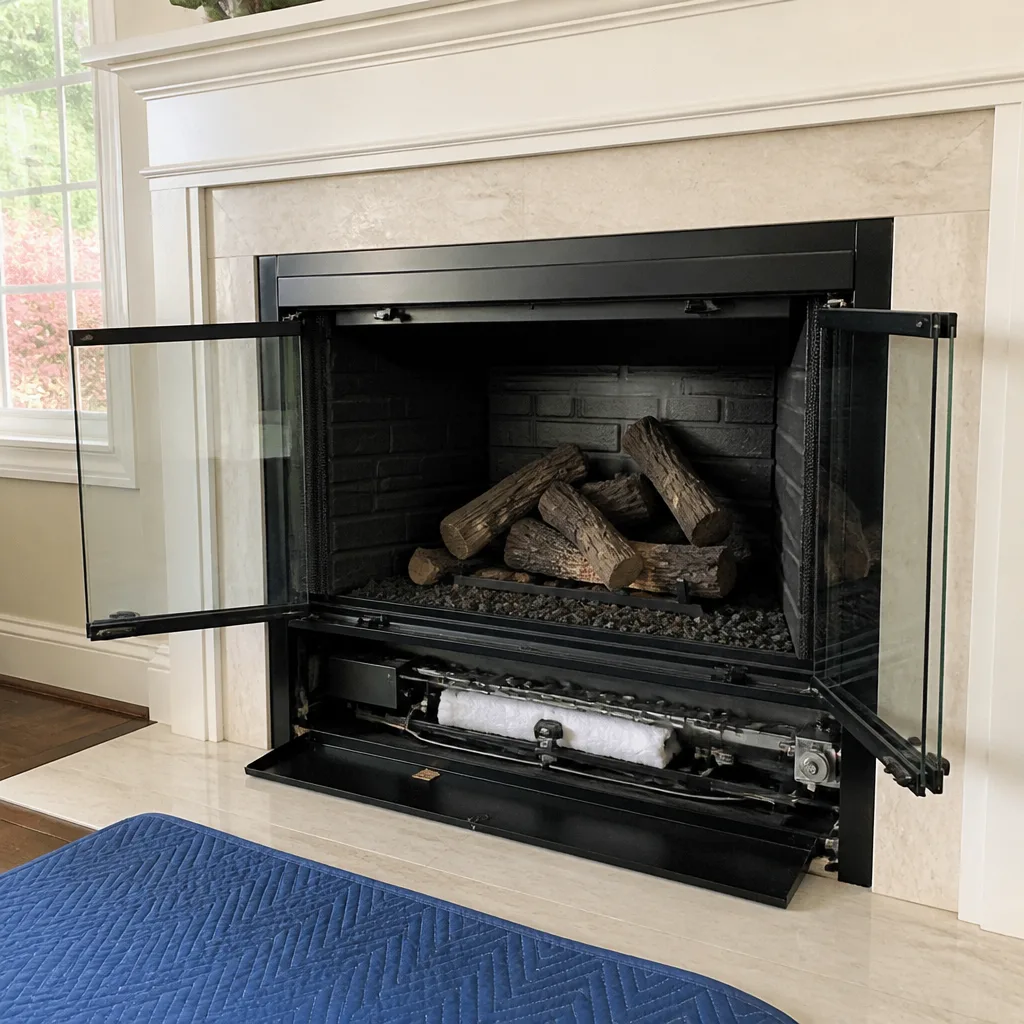 Gas fireplace service
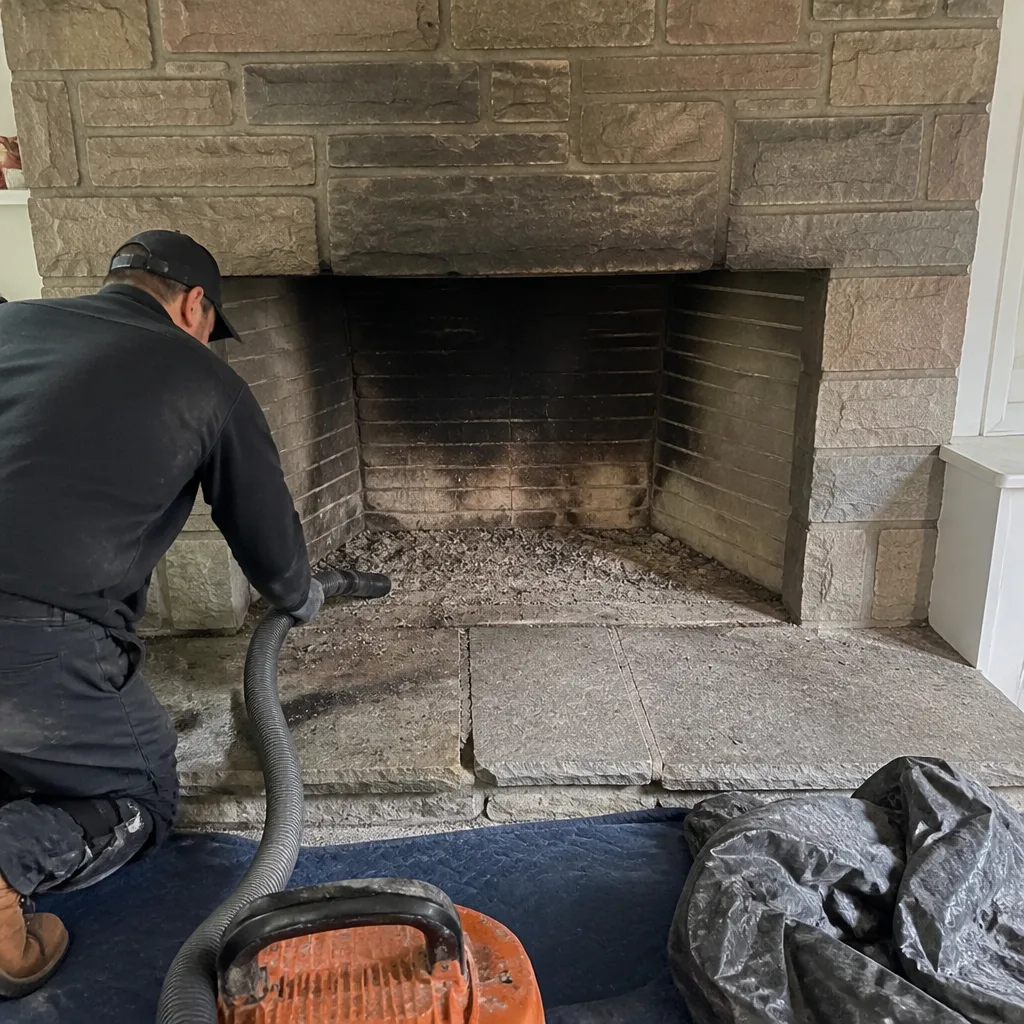
Level 1 sweep and inspection to the NFPA 211 annual standard - flue, crown, cap, and flashing checked and photographed
Chimney sweep logs do not sweep chimneys. They loosen some creosote - which then falls where a brush and vacuum still have to collect it.
Chimney Sweep Maintenance Checklist for Inwood Homeowners
Most chimney maintenance advice online treats the entire chimney as a single item: call a sweep once a year, check the box, move on. That advice hides the real story. The cap, crown, flashing, liner, smoke chamber, firebox, and damper each age on a different schedule and fail in a different way, which means a single annual appointment can miss a problem developing in one component while everything else looks fine. In a neighborhood like Inwood, where many homes date to the early and mid-twentieth century and winters swing hard between freezing and thawing, that gap matters more than it does in milder climates. This guide breaks the chimney into its parts, shows you what each one looks like when it’s failing, tells you what you can safely check yourself, and gives you a simple log to track it all between professional visits.
Quick Answer
A chimney maintenance checklist for Inwood homeowners should track seven components separately: cap, crown, flashing, liner, smoke chamber, firebox, and damper. Check the cap, crown, and flashing visually from the ground each season, watch the firebox and damper from inside the firebox, and have a professional inspect the liner and smoke chamber, because those are the parts you can’t safely see yourself. In Inwood’s freeze-thaw climate, mortar and crowns need the closest attention, and any change in how the chimney draws or smells is a reason to book an inspection rather than wait.
Styles & brands we work with
- Sweep & inspection
- Caps & crowns
- Flue relining
- Masonry repair
- Gas fireplace service
Table of Contents
- The Seven-Part Component Checklist
- What You Can Safely Check Without a Ladder
- How Inwood’s Freeze-Thaw Cycle Attacks Masonry
- Level 1, 2, and 3 Inspections: Which One Your Checklist Triggers
- Building a Chimney Service Log That Actually Works
- Timing the Checklist Through the Inwood Year
- Common Mistakes to Avoid
- When to Call a Professional
The Seven-Part Component Checklist
A chimney is a system, and the parts of that system don’t wear out together. Treating them as separate checklist entries is the whole point of this guide. Here’s what each component is and what it looks like when it’s starting to go.
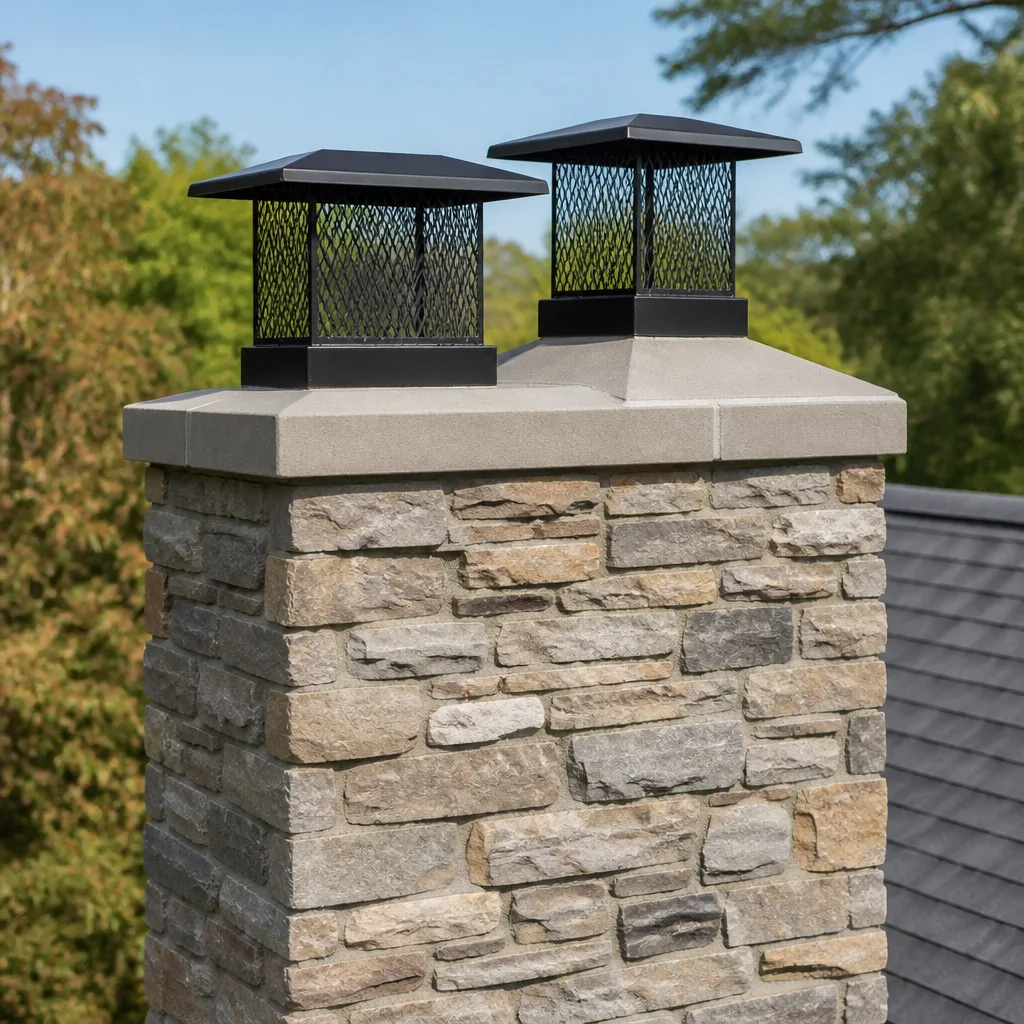
- Chimney cap. The cap sits on top of the flue and keeps rain, animals, and debris out. Failing caps show rust-through on metal, cracked or missing screens, a cap sitting crooked, or visible gaps where it meets the flue. A missing or damaged cap lets water straight into the flue, which then feeds every problem below it.
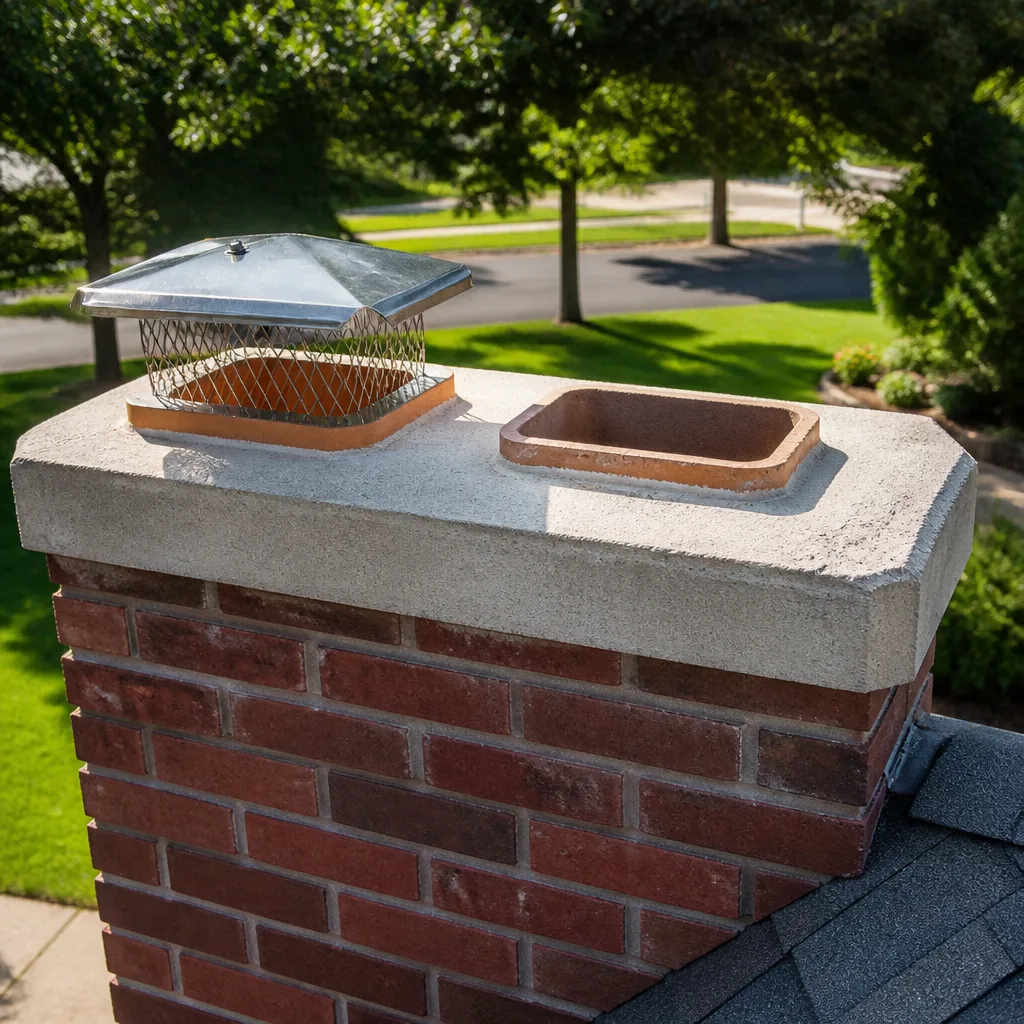
- Crown. The crown is the concrete or masonry slab at the very top that sheds water away from the chimney body. Look for hairline cracks that have widened, chunks missing from the edge, or a crown that has pulled away from the flue. A cracked crown is the single most common entry point for water damage in older masonry chimneys.
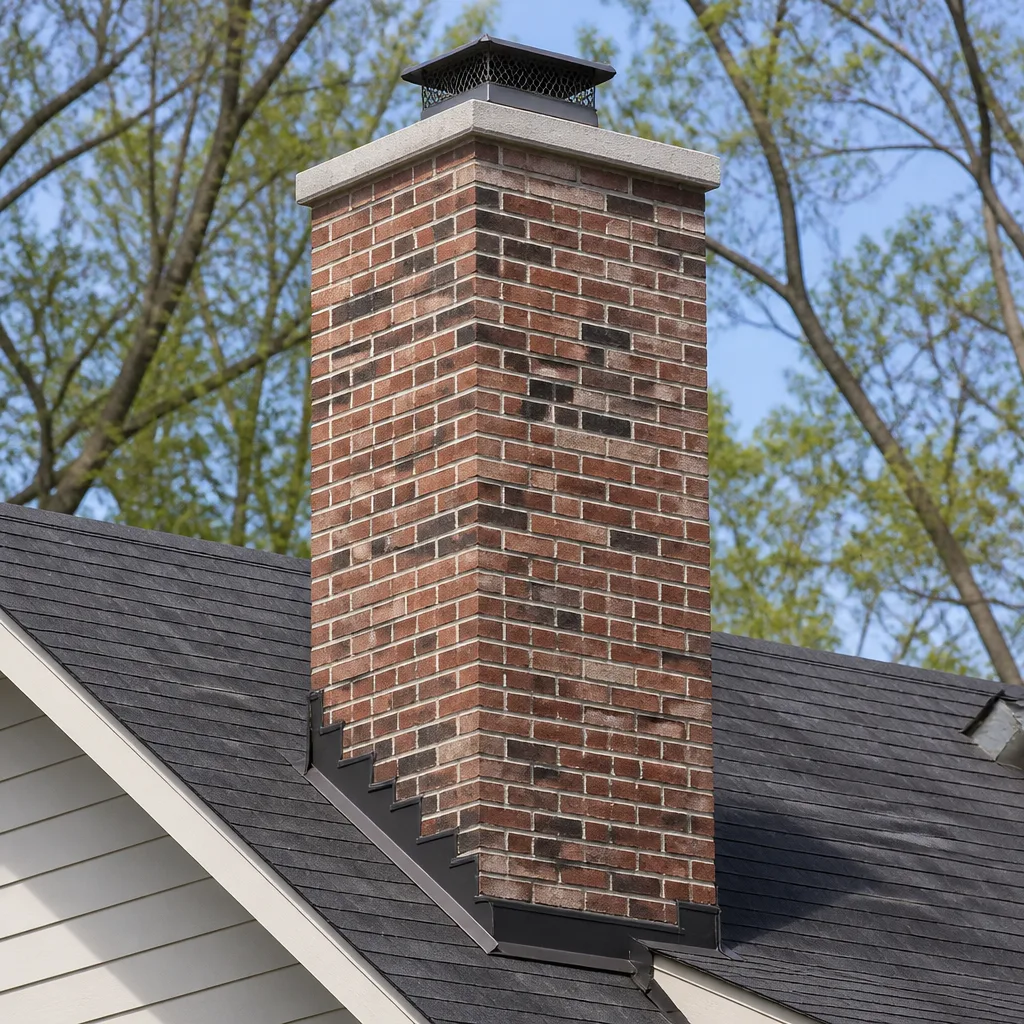
- Flashing. Flashing is the metal that seals the joint where the chimney passes through the roof. Failing flashing shows as lifted, curled, or missing metal, rust streaks down the chimney sides, or staining on ceiling and attic surfaces below the chimney line. It’s a roofing-adjacent detail, but it belongs on a chimney checklist because that’s where the leak originates.
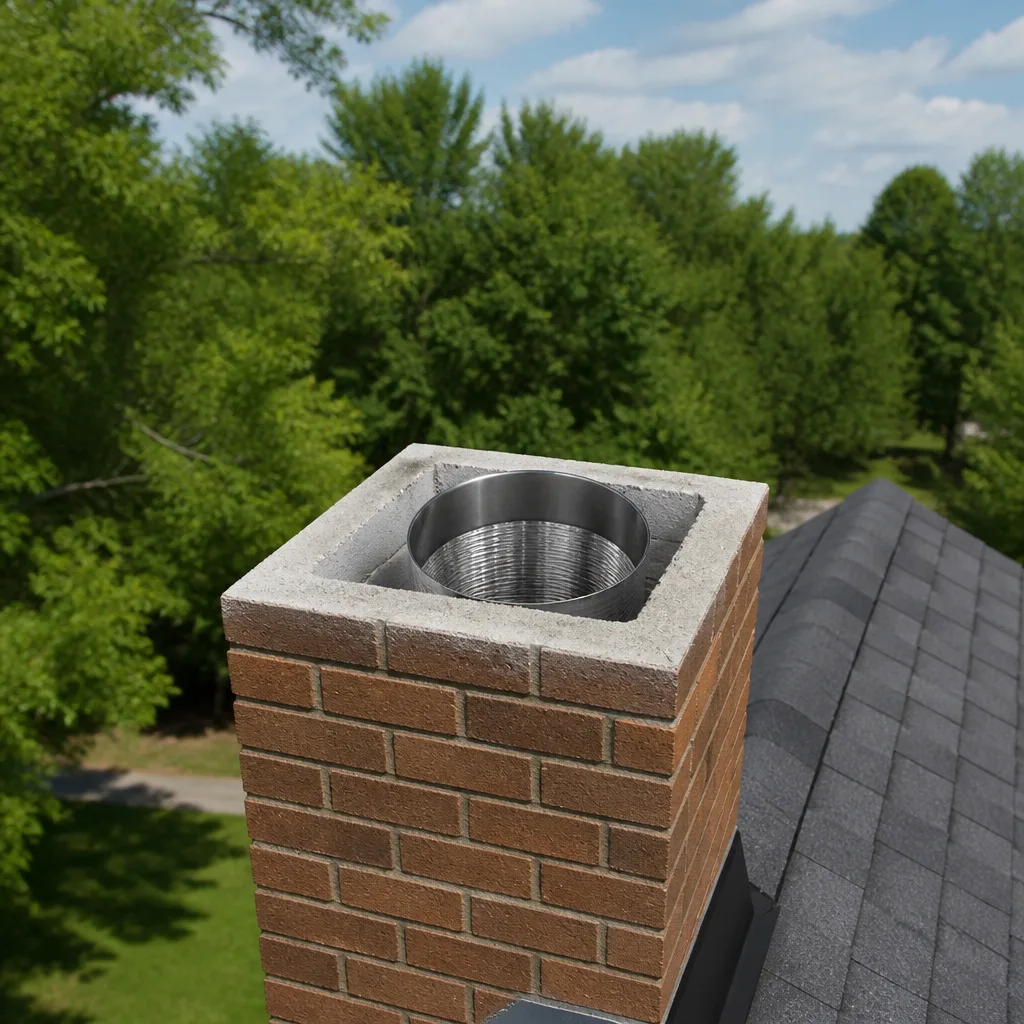
- Liner. The liner carries smoke and gases up and out. A clay tile liner with cracked, spalled, or shifted tiles, or a metal liner with visible corrosion or separated joints, is a serious finding. You can’t assess the liner properly from the ground or the firebox, which is exactly why it needs professional inspection.
- Smoke chamber. The smoke chamber is the tapered space above the damper that funnels smoke into the flue. Rough, corbelled masonry here collects creosote and slows draft. Failing signs include a smoky smell in the room, poor draw on startup, and visible rough ridges when you look up past the damper with a light.
- Firebox. The firebox is the brick box where the fire burns. Loose or crumbling mortar joints between firebricks, cracked bricks, or white chalky staining are signs of heat damage and moisture. Deteriorated firebox mortar lets heat reach surrounding structure.
- Damper. The damper is the metal door above the firebox that controls draft. It fails when it no longer opens fully, sticks, doesn’t seal when closed, or has rusted hinges. A damper that won’t close lets heated room air escape up the flue when the fireplace is idle.
In our experience, the components that fail earliest in Inwood homes are the crown and the flashing, because both take the brunt of water and frost. The cap comes next, and the liner tends to follow years of water intrusion from above.
What You Can Safely Check Without a Ladder
You don’t need to climb anything to catch most early warning signs. A pair of binoculars and a flashlight get you a long way. Here’s what’s safe to assess yourself, and what isn’t.
From the ground, with binoculars:
- Look at the crown edge for missing chunks or a visible gap between the crown and the flue.
- Check whether the cap is sitting straight and the screen is intact.
- Scan for rust streaks, white staining, or dark water marks down the chimney sides.
- Note any leaning or spalling brick, especially near the roofline where freeze-thaw does its worst work.
- Look at the flashing where the chimney meets the roof for lifted or missing metal.
From inside the firebox, with a flashlight:
- Look at the firebrick joints for loose or crumbling mortar.
- Check the damper opens and closes smoothly and seals when shut.
- Shine the light up past the damper to see whether the smoke chamber surface looks rough or heavily coated.
- Note any smoky odor, especially on damp days, which can point to a draft or moisture problem.
What to leave to a professional: the liner interior, the full smoke chamber, the flue above the smoke chamber, and anything that requires getting on the roof. Those need a camera and, often, a ladder. We use camera inspection as part of every visit precisely because the parts you can’t see are where the expensive surprises hide. The Chimney Sweep Inwood team can walk you through what the camera finds on your own chimney, in your own home, so nothing is taken on faith.
How Inwood’s Freeze-Thaw Cycle Attacks Masonry
Inwood sits in a climate that freezes and thaws repeatedly through the winter, and that cycle is the reason mortar and crowns need closer watching here than in places with a steadier cold. The mechanism is simple. Masonry is porous. Water soaks into mortar joints and into the crown during rain and snowmelt. When the temperature drops, that water freezes and expands, and the expansion pries at the joint from the inside. When it thaws, the water runs deeper. Repeat that dozens of times in a season and mortar that looked sound in October can be crumbling by March.
The crown takes the worst of it because it’s flat and exposed, and water pools on any low spot or hairline crack. Once a crack opens, freeze-thaw widens it year after year, and the crown begins to shed water toward the flue instead of away from it. The same cycle works on mortar joints in the chimney body, especially on the side that gets the least sun, where frost lingers longest.
What this means for an Inwood homeowner’s checklist:
- Inspect the crown and mortar joints after the last hard freeze of the season, not just before the heating season starts. Damage often shows up in spring, not fall.
- Treat any hairline crown crack as a checklist item to watch, and have it sealed before the next winter rather than after.
- Watch the shaded side of the chimney more closely than the sunny side.
- Don’t assume a chimney that survived last winter is fine this year. Freeze-thaw damage is cumulative and quiet.
When a crown is cracked or a mortar joint has opened, the repair materials matter. We use professional-grade products and sealants rather than whatever’s on the shelf at a general hardware store, because a crown repair that fails after one winter just restarts the cycle. For liners and masonry flues that have suffered years of moisture, HeatShield ceramic resurfacing can restore a deteriorating clay flue without a full liner replacement, a method most general contractors can’t install.
Level 1, 2, and 3 Inspections: Which One Your Checklist Triggers
Not every checklist finding calls for the same level of inspection. The National Fire Protection Association’s NFPA 211 standard defines three levels, and knowing which one a given finding triggers keeps you from either under-inspecting or paying for more than you need.
- Level 1 inspection. A visual check of the readily accessible parts of the chimney and venting, without tools that require opening anything up. This is the standard inspection when you’ve had no changes, no problems, and just want an annual check. It covers the firebox, damper, and what’s visible of the flue and exterior.
- Level 2 inspection. A more thorough inspection, including accessible attics, crawl spaces, and the use of a camera to see the interior of the flue. It’s triggered by a change in the system, such as a new appliance, a change in fuel type, a chimney that has suffered a chimney fire or earthquake, or a property transfer. A camera inspection is also the right response to any finding on your checklist that suggests a liner or smoke chamber problem.
- Level 3 inspection. The most involved level, used when a Level 1 or 2 inspection reveals a hidden hazard that requires access to concealed areas, which can mean removing parts of the chimney or surrounding structure. It’s rare and reserved for serious suspected problems.
So how does the checklist connect? A finding of a cracked crown or damaged cap calls for a Level 2 inspection to check whether water has reached the liner. A smoky smell or poor draft calls for a Level 2 to examine the smoke chamber and flue interior. A clean visual survey with no changes calls for a Level 1. If a Level 2 turns up something serious in a concealed space, that’s when a Level 3 conversation begins. We explain which level we’re recommending and why, so you understand what the inspection is meant to answer.
Building a Chimney Service Log That Actually Works
A checklist is only useful if it remembers for you. A simple log, kept by component rather than by date alone, tells you at a glance what’s been done and what’s due. Here’s a format that works well for Inwood homeowners.
Set up one page per component (cap, crown, flashing, liner, smoke chamber, firebox, damper), and on each page record:
- The date of each service or inspection.
- The finding for that component (for example: “crown – hairline crack, monitored,” or “liner – camera checked, no defects”).
- The action taken (cleaned, sealed, repaired, replaced, or no action needed).
- The materials or brand used, if a repair was made.
- The next recommended check date.
Why by component and not just by date? Because a date-only log hides the pattern. If your crown gets a new note every spring, you can see the deterioration trend and decide to repair rather than keep patching. If your liner has been camera-checked clean for several years running, you have a real basis for confidence. And if you ever sell the home, a component log is a concrete maintenance record, which is worth more than a stack of receipts.
Keep the log with your home records, and bring it to each visit. We appreciate seeing it because it tells us the history we can’t see from the inside of a flue. A camera inspection and photo report each visit give you the raw material to update the log accurately, rather than relying on memory. For a broader look at what a routine visit covers, see our chimney sweep page.
Timing the Checklist Through the Inwood Year
Chimneys don’t fail on a calendar, but the Inwood year does give you natural checkpoints. Tying the checklist to the seasons makes it easier to remember and keeps you ahead of the freeze-thaw damage cycle rather than behind it.
- Early fall, before heating season. Book the annual inspection and sweep. Check the cap, crown, and flashing from the ground. This is the moment to catch anything that developed over the summer.
- Midwinter, after heavy snow or a hard freeze. A ground-level look for new cracks, spalling brick, or ice damming at the crown. Note any change in draft or smoky smell in the log.
- Early spring, after the last freeze. This is when freeze-thaw damage shows itself. Recheck the crown and mortar joints carefully, and compare against your fall notes.
- Late spring or summer. The best window to do repair work, when the weather is cooperative and any masonry repairs can cure properly. If your fall or spring notes flagged a crown crack or damaged flashing, this is when to fix it.
There’s a saying among chimney professionals that the best time to repair a chimney is when you don’t need to. In Inwood’s climate that’s especially true: a crown repair done in summer, before the next freeze cycle, is far cheaper and simpler than the water damage it prevents. And the repair work itself, from crown and cap work to structural masonry, all falls under the chimney repair side of the checklist. We do both sides under one roof, so a finding on the sweep side doesn’t hand you off to a second contractor.
See the difference
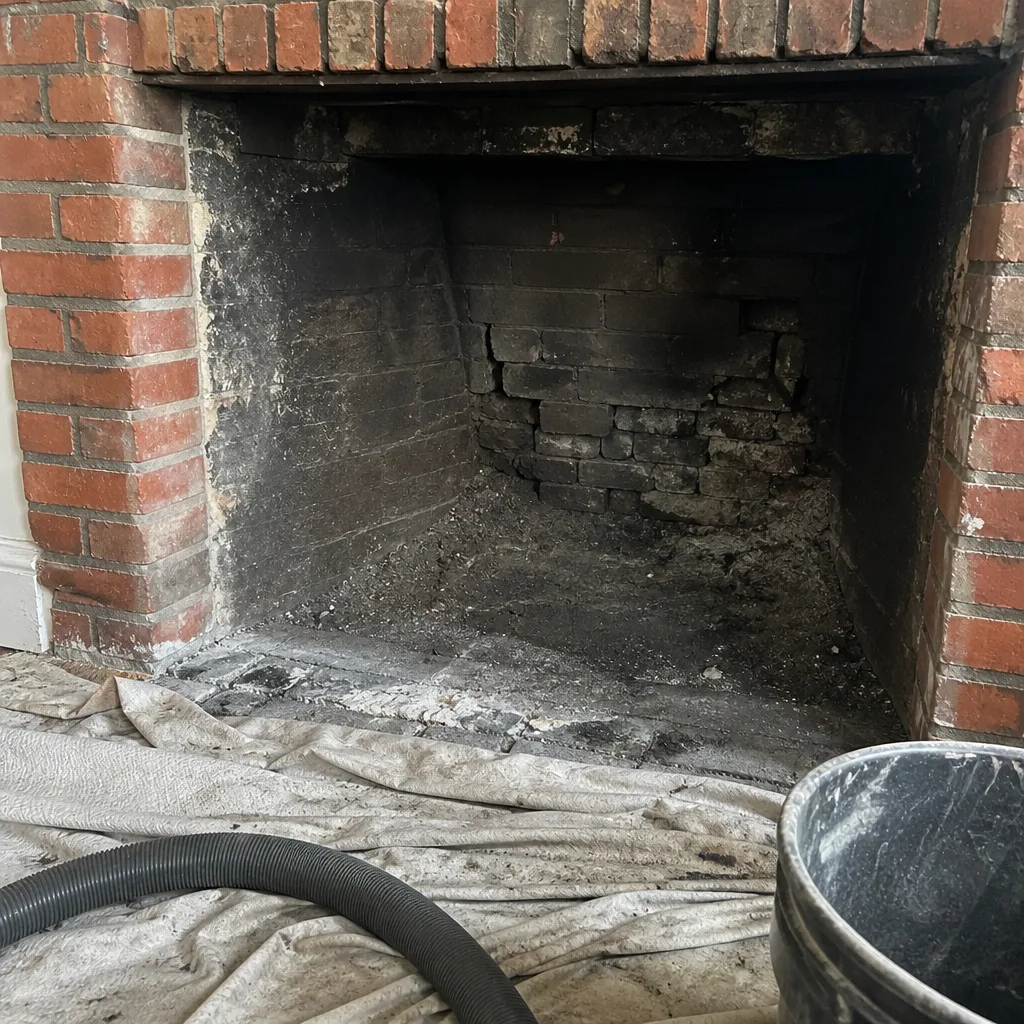 Before
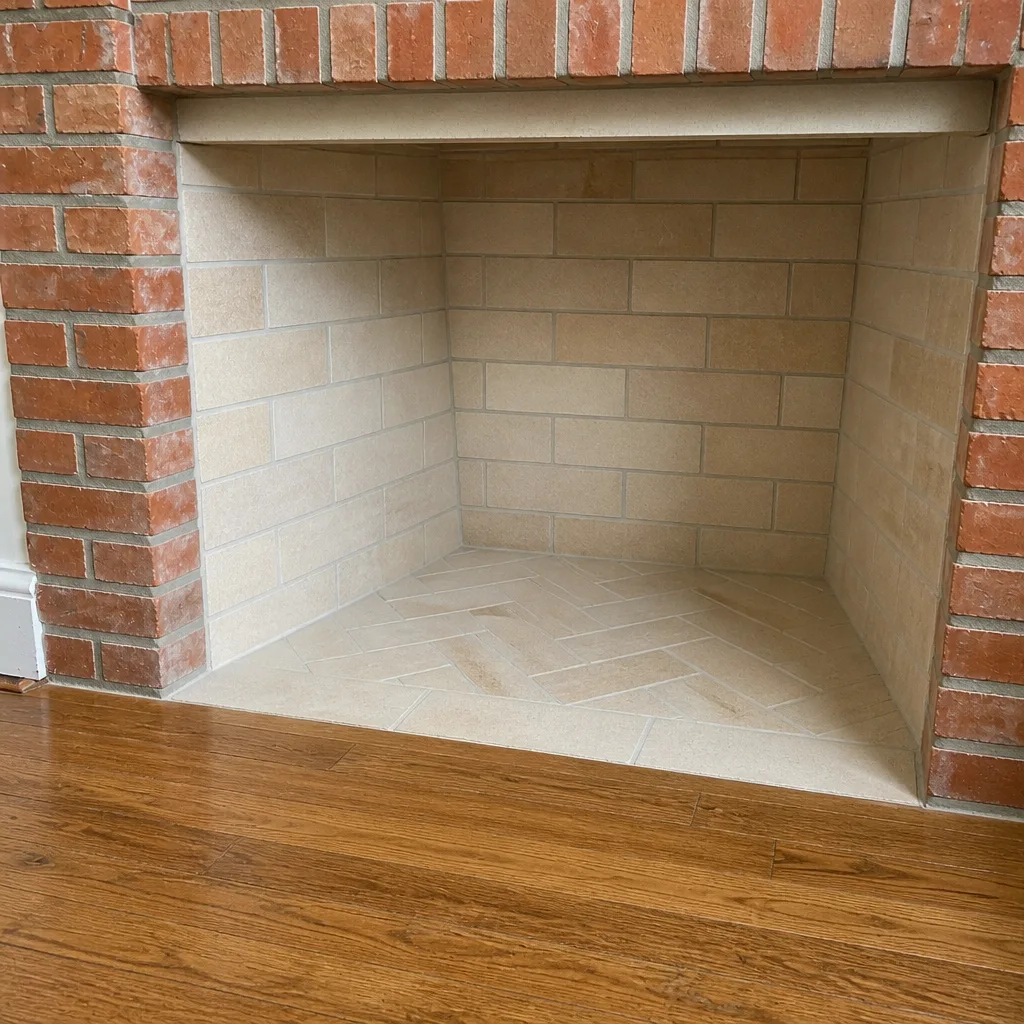 After
 Before
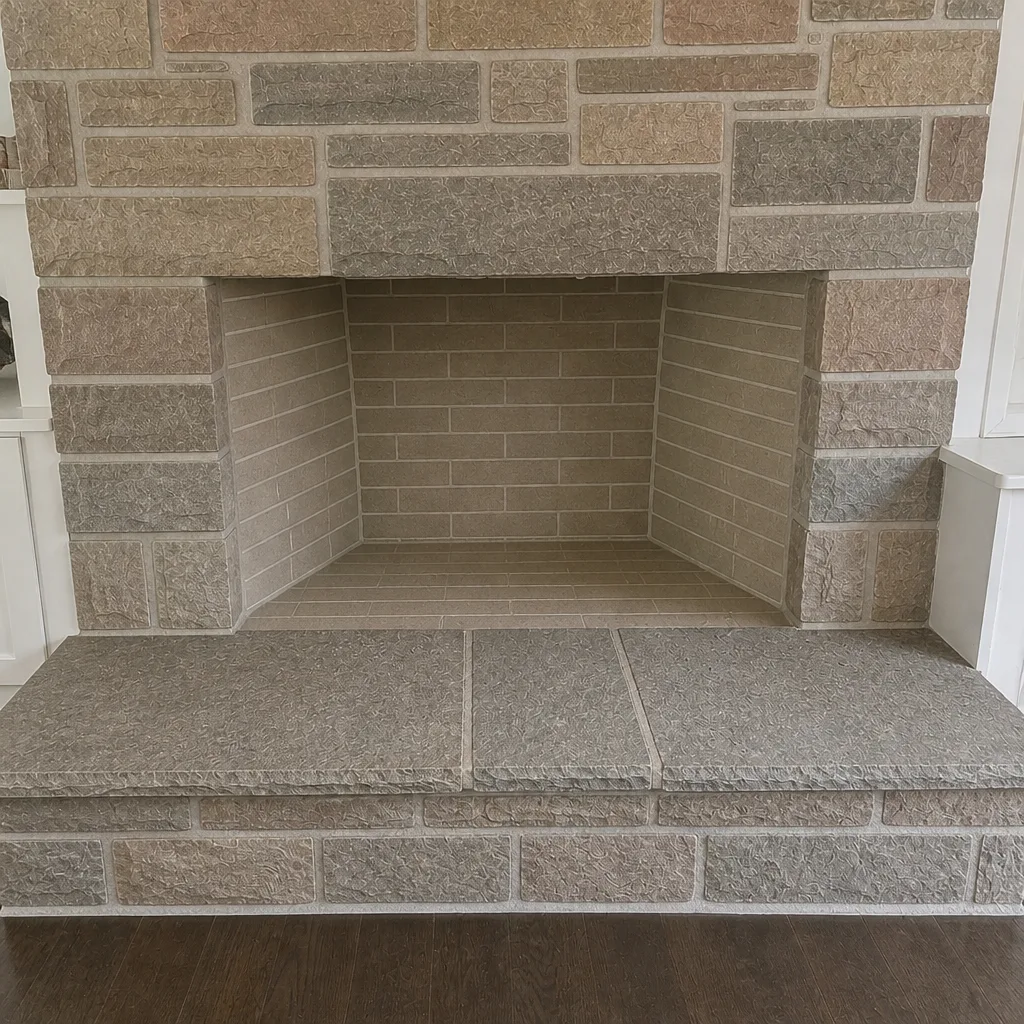 After
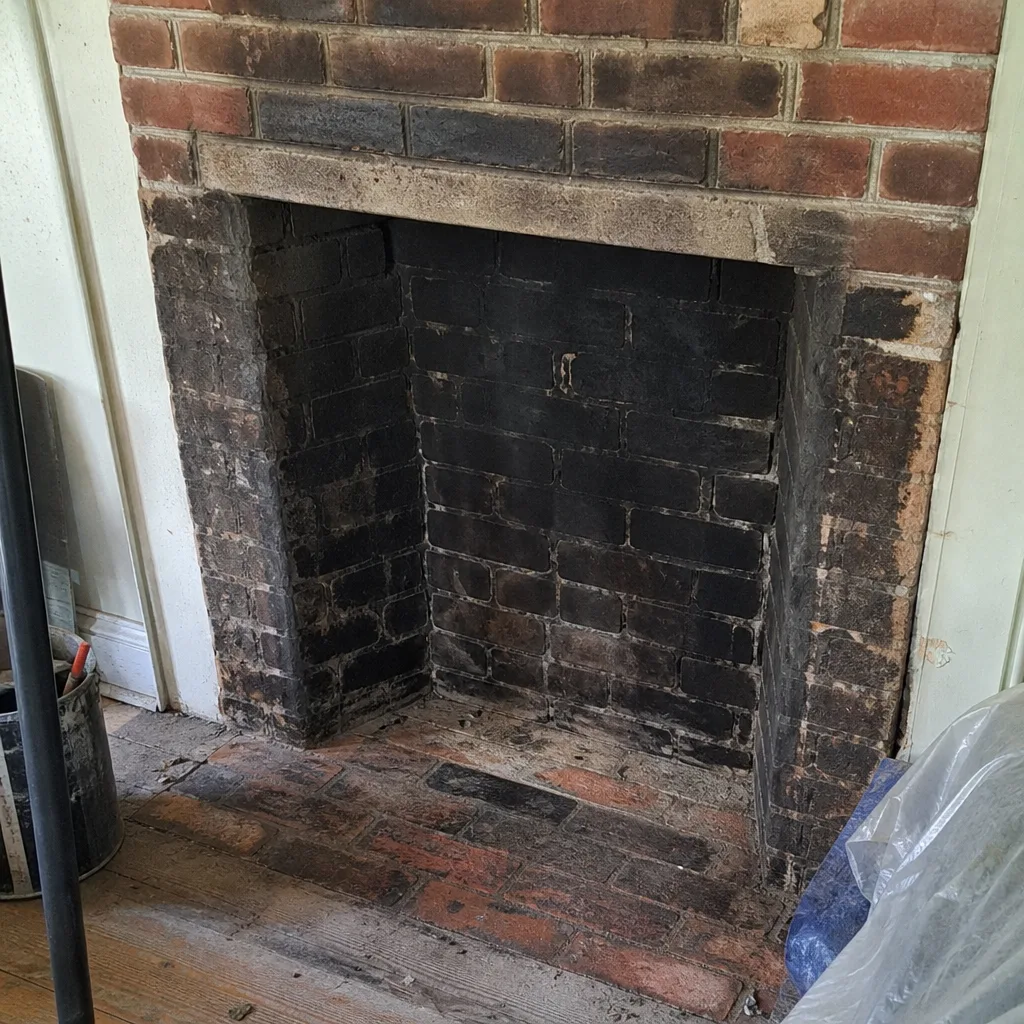 Before
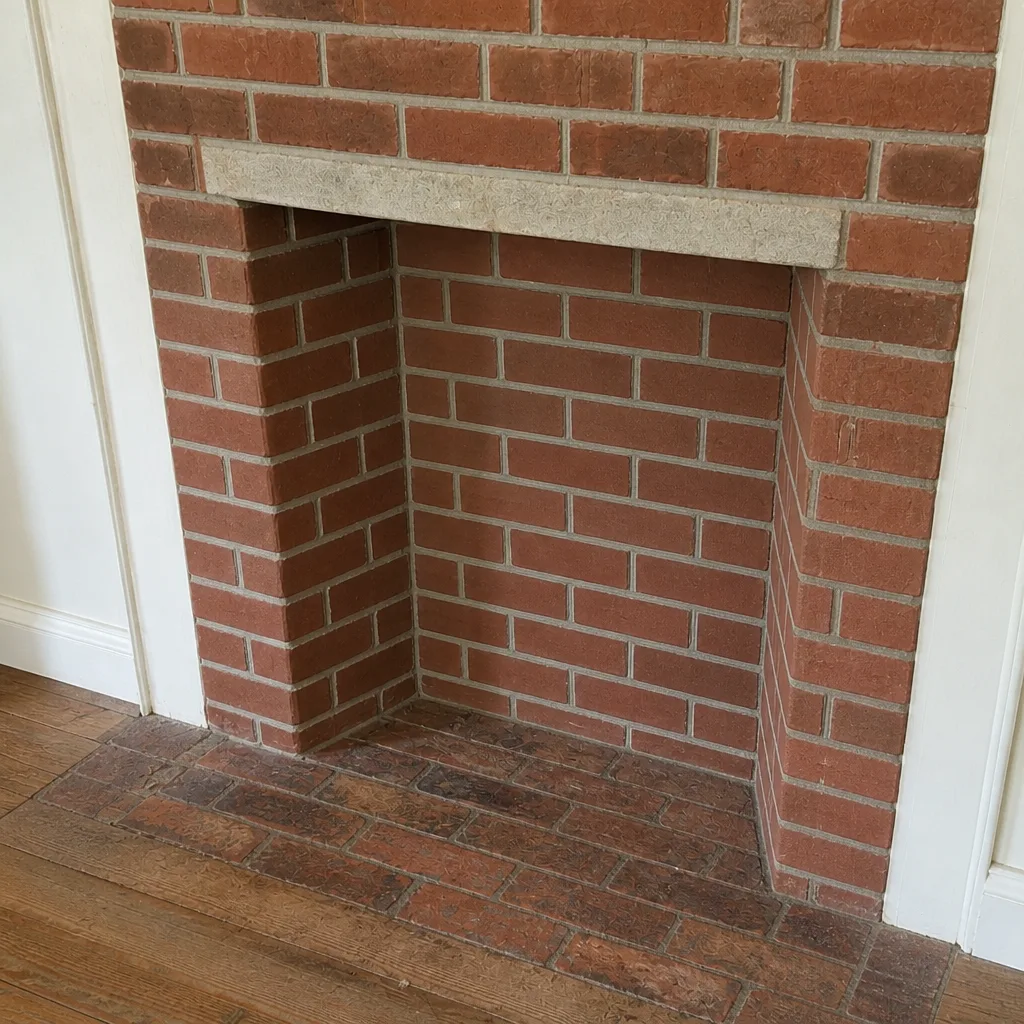 After
Common Mistakes to Avoid
- Treating the chimney as one item. An annual sweep is necessary but not sufficient. If the checklist never separates cap, crown, flashing, and liner, a developing crown crack can go unnoticed for years. Track each component.
- Skipping the spring check. In many climates the pre-heating-season check is enough. In Inwood, freeze-thaw damage shows up in spring, so a fall-only routine misses the season that does the most harm.
- Climbing the roof to “take a look.” A steep or wet roof is no place for a homeowner with a flashlight. Ground-level checks with binoculars catch most of what matters, and the rest is a professional’s job for good reason.
- Sealing a crack and calling it done. A crown crack that’s patched without addressing the water getting in from above and the freeze-thaw cycle below will just reopen. The right fix treats the cause, not just the surface.
- Ignoring a change in draft or smell. A fireplace that suddenly smokes, or a smoky odor on damp days, is a real finding, not a quirk of the weather. Put it in the log and get it looked at.
- Letting a general contractor handle chimney repairs. Multi-trade outfits often lack the HeatShield capability, the liner-specific materials, and the daily chimney focus that specialized repair requires. Chimney work is its own trade.
- Never updating the log. A checklist you don’t record is a checklist you’ll redo from memory. The log is what turns a one-time check into years of useful history.
When to Call a Professional
Some checklist findings are watch-and-wait, and some are call-now. Call a professional if you see a cracked or chunked crown, damaged or missing flashing, a cap that’s loose or rusted through, or spalling brick near the roofline. Call if you notice a smoky smell, poor draft, a firebox with crumbling mortar joints, or a damper that won’t close. And call if you have any reason to suspect the liner, because the liner is the part you can’t safely assess yourself. Chimney Sweep Inwood offers free estimates in Inwood. Call (844) 625-7414. We answer 24/7. Fast dispatch from 7am to 7pm, Sunday through Friday.
Frequently Asked Questions
Most wood-burning chimneys should be swept and inspected once a year, and more often if you burn heavily. In Inwood’s freeze-thaw climate, we recommend adding a spring visual check to catch mortar and crown damage that shows up after winter. The annual sweep clears creosote; the inspection is what catches the structural findings your checklist is tracking. Call (844) 625-7414 for a free estimate, and we’ll help you decide what your chimney needs.
A Level 1 inspection is a visual check of the readily accessible parts of the chimney with no tools that open anything up. A Level 2 inspection is more thorough, includes a camera look at the flue interior, and is triggered by a change in the system, a suspected problem, or a property transfer. If your checklist flags a crown, flashing, or draft problem, that points toward a Level 2. Call (844) 625-7414 and we’ll explain which level fits your situation.
You can safely check the cap, crown, and flashing from the ground with binoculars, and the firebox and damper from inside with a flashlight. What you shouldn’t do yourself is climb the roof or assess the liner interior, because those require a ladder and a camera and carry real risk. Leave the height and the flue interior to a trained professional. Call (844) 625-7414 for a free estimate on a full inspection.
Because Inwood’s freeze-thaw cycle does its worst damage over the winter. Water seeps into mortar joints and crowns, freezes, expands, and repeats, and the damage often becomes visible as the ground thaws in spring. A spring visual check catches widening cracks and spalled brick before the next heating season. If your spring check turns up anything, call (844) 625-7414. We answer 24/7. Fast dispatch from 7am to 7pm, Sunday through Friday.
A failing crown shows as hairline cracks that have widened, chunks missing from the edge, or a visible gap between the crown and the flue. You can often spot it from the ground with binoculars. Because a cracked crown lets water reach the liner, it’s worth a professional look rather than a wait-and-see. Call (844) 625-7414 for a free estimate.
Yes, both belong on the annual checklist because they’re the first line of defense against water. A damaged cap or crown sends water into the flue, where it feeds liner and masonry problems that cost far more to fix. A quick ground-level look each spring and fall, plus the annual professional inspection, keeps both in check. Call (844) 625-7414 to have both assessed, and ask about chimney cap & crown work if either needs repair.
The Bottom Line
A chimney maintenance checklist that treats the whole chimney as one item will always miss something, because the cap, crown, flashing, liner, smoke chamber, firebox, and damper fail on different timelines. Check what you safely can from the ground and the firebox, track each component in a simple log, and let a professional handle the liner, the flue interior, and anything that needs a ladder. In Inwood’s freeze-thaw climate, add a spring check and watch the crown and mortar joints most closely. Keep it simple, keep it in writing, and the chimney stays a system you understand rather than a mystery you hope holds up.
Written by the team at Chimney Sweep Inwood.